Who you are buying from
A wheel bearing specialist, not a general parts trader
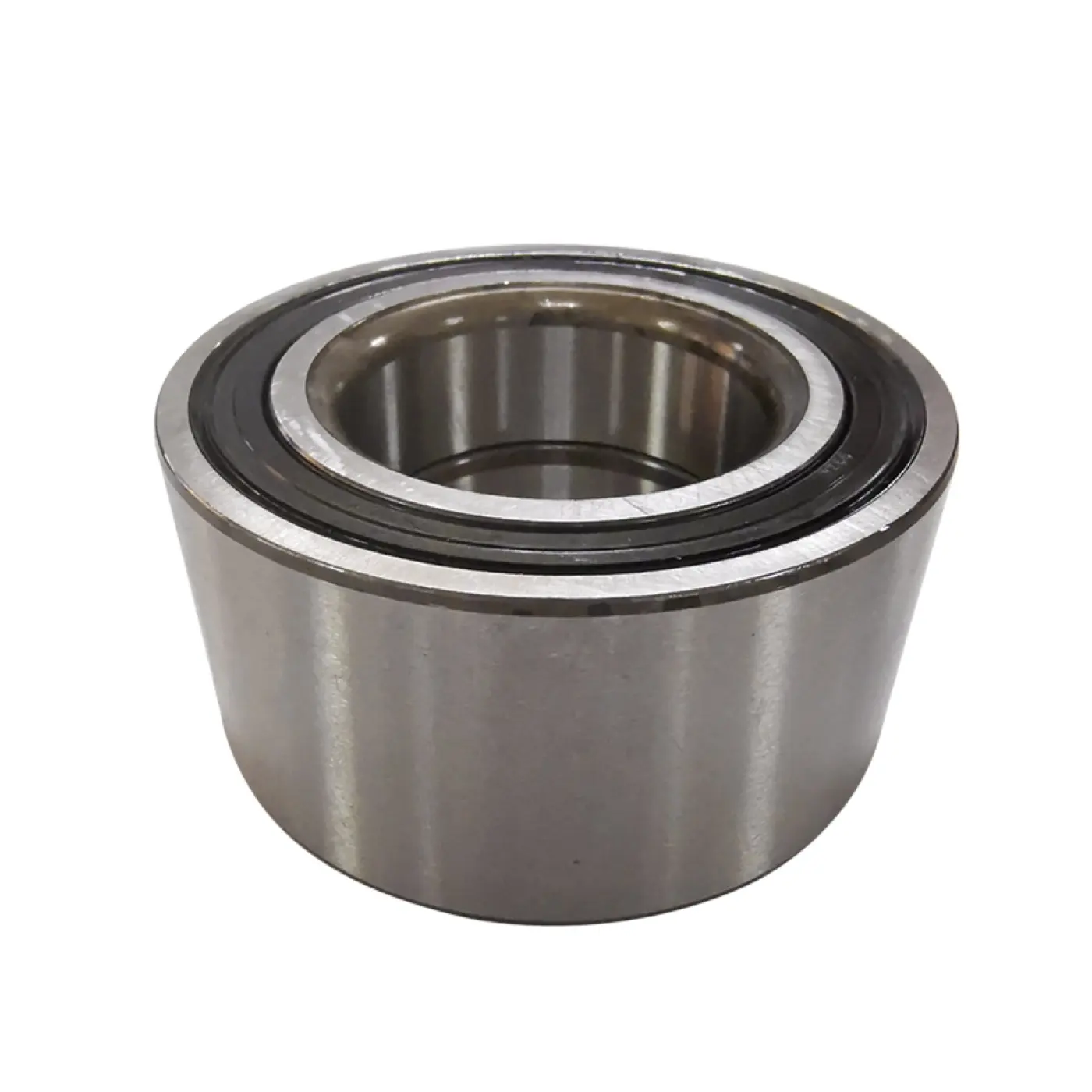
Qdyanshuo supplies wheel hub bearings and hub units from Taicang, Suzhou, Jiangsu, China. We work with one manufacturing partner rather than sourcing from whoever is cheapest that month — because for a safety-critical part, a stable single source is the whole point.
Background
Where the parts come from
The plant is founded
Our manufacturing partner has been building bearings continuously since 1958.
Tier-2 supply to vehicle manufacturers
Fifteen years supplying into vehicle manufacturer programmes, which is where the process discipline comes from.
63 references for the European car park
63 part numbers and 225 cross references, weighted towards Audi, Volkswagen, Škoda, SEAT, Mercedes-Benz, BMW, Porsche and Volvo platforms.
Manufacturing
What the plant actually runs
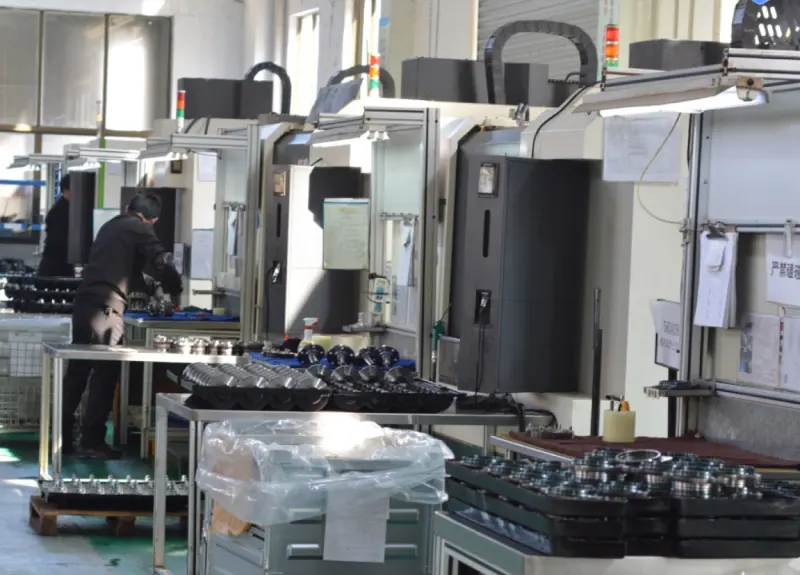
Forging, heat treatment, grinding, assembly and CNC turning are all in house — 50 CNC lathes, 20 machining centres, 32 grinding machines, 28 hub-bearing assembly lines and 2 heat-treatment lines, across 6,600 m².
Inside the plant
What the line actually looks like
Six clips, no music, no narration. Assembly, packing and the test bench every unit passes before it is boxed.
ABS sensor test bench
Every hub unit is put on this bench before it is packed. The trace on the screen is the encoder signal the ABS ring produces as the unit turns. A hub that runs quietly but writes a dirty trace is the single most common reason a part comes back.
Generation 2 flanged bearings
Flanged bearings staged after assembly. Preload is set here on the line, not in the workshop, which is what makes a Generation 2 unit faster to fit than a bare bearing.
Generation 3 hub units, packed
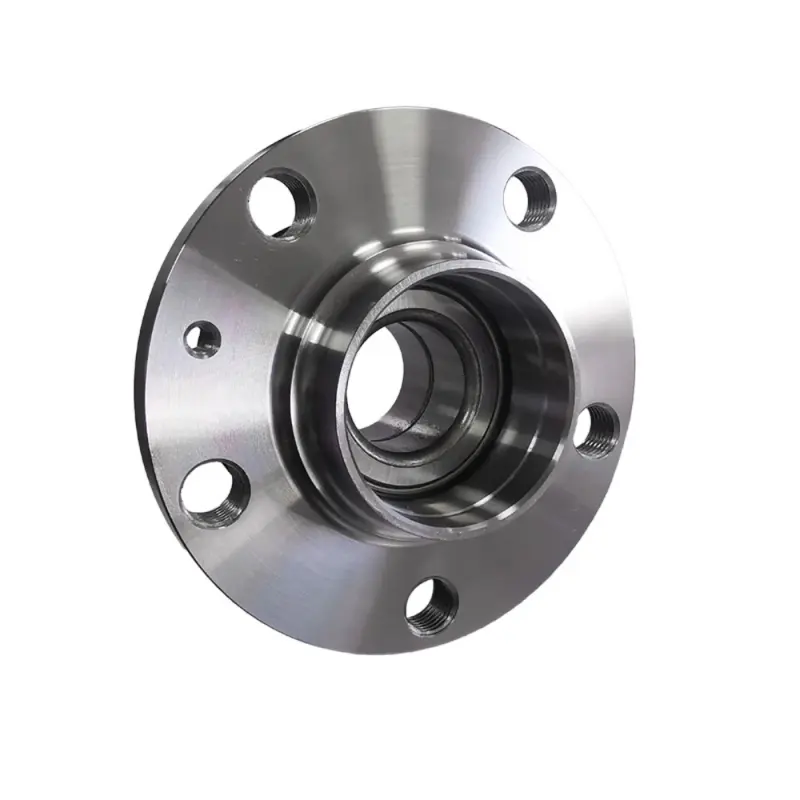
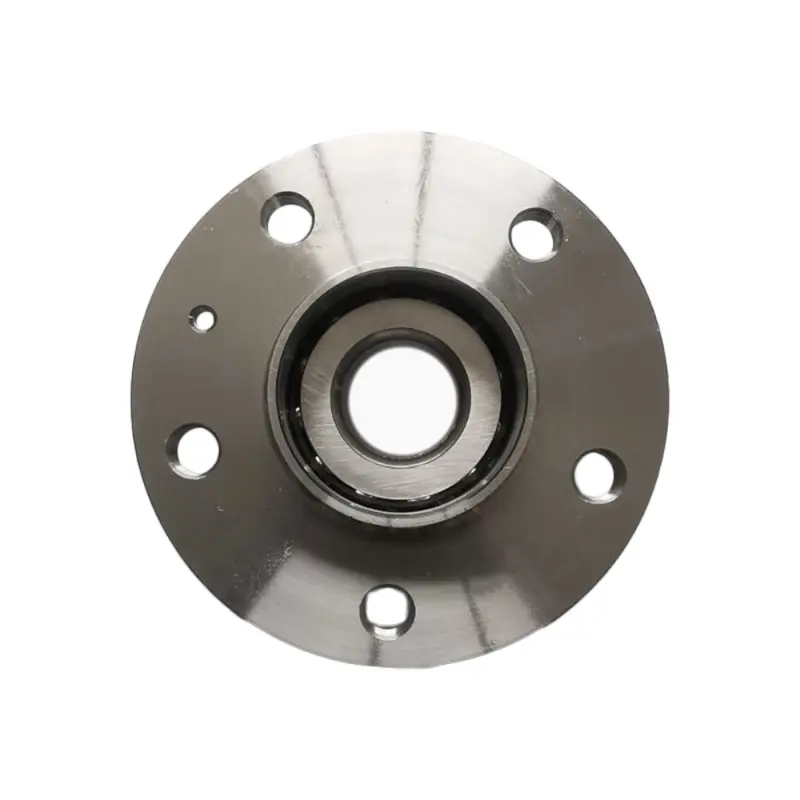
Complete bolt-on hub units wrapped for shipment. This is the format most European front axles built after roughly 2005 take.
Generation 3 units, close up
Splined bore, wheel flange and studs on finished units. Worth looking at the flange face: that is the surface the brake disc runs against.
Generation 1 bearings in bulk
Sealed double-row ball bearings with no flange — the cheapest to ship and the design still used on many rear axles and older platforms.
Finished units with dust caps
Dust caps fitted and units ready for cartons. Packing detail matters more than it sounds: a hub unit that arrives with a dented encoder ring is scrap.
Quality
Three certifications and one test that matters
Our manufacturing partner holds IATF 16949:2018, ISO 45001:2018, ISO 14001:2015. Certificates are available on request once we are in commercial discussion.
Every unit is tested for ABS sensor signal before packing. A hub unit that turns quietly but produces a dirty encoder signal is the most common cause of a returned part.
Internal clearance and running vibration are measured on the line, not sampled at the end.
Independent bench testing on top of in-house inspection.
Bill of materials
The three inputs that decide service life
Forging steel from Xingcheng Special Steel (GB/T699-2015 55# forging steel), the same mill supplying SKF, FAG and NSK. G10-grade balls from Tsubaki Nakajima, Japan. KYODO YUSHI AF-1, Japan. These three are where a cheap hub bearing is actually cheap, and they are the three questions worth asking any supplier.
Ask us the hard questions
Steel mill, ball grade, grease specification, certificates. We would rather answer them before you order than after.