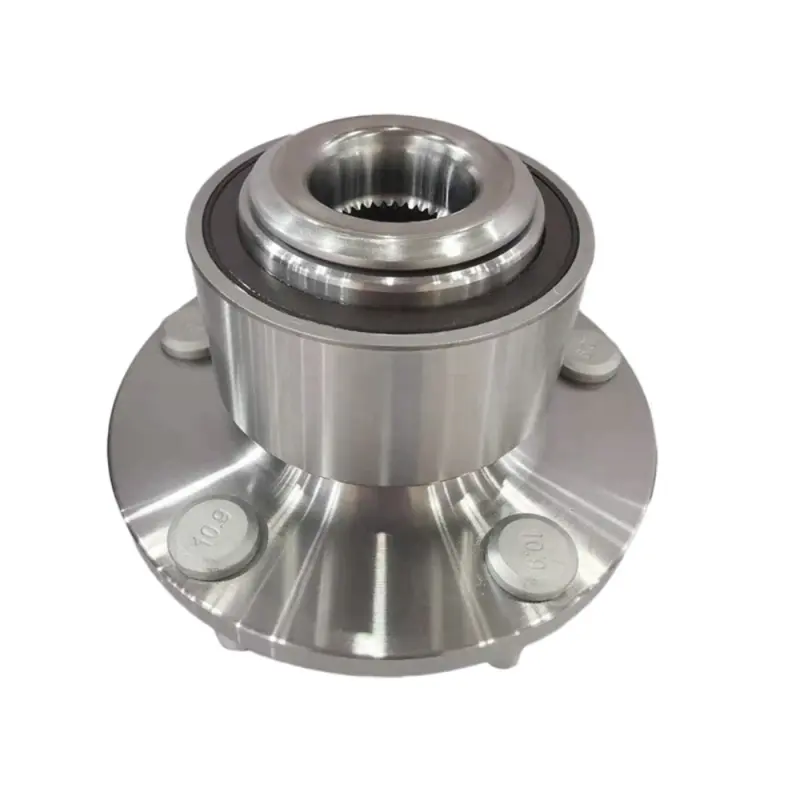
Every hub bearing carries several identities at once, and knowing which one you are holding decides how fast you find a replacement.
OE numbers
The vehicle manufacturer's own number — for example a Volkswagen Group number in the 1K0 / 8K0 / 4H0 families, or a Mercedes-Benz number in the A-prefixed format. This is the number stamped on the original part or listed in the vehicle manufacturer's parts system. It is the most precise identifier, and the one worth quoting against, because it removes any ambiguity about fitment.
Aftermarket brand numbers
Each aftermarket brand assigns its own reference: SKF uses VKBA numbers, FAG uses 713-series numbers for hub kits, SNR uses R-series numbers, and brands such as MEYLE, RUVILLE, OPTIMAL, febi bilstein and Blue Print all maintain their own catalogues.
These are the numbers a European distributor or workshop actually types into a system every day — which makes them the most valuable numbers to be searchable against. Somebody searching an aftermarket brand reference is already sourcing a replacement and comparing suppliers.
How to use them together
- If you have the old part in your hand, search the number stamped on it — usually the OE number.
- If you are replacing an existing supply line, search the aftermarket brand reference you currently buy.
- If you have neither, work from vehicle make, model, year and axle position, then confirm against dimensions.
Cross-references are not always one-to-one. A single OE number can correspond to two aftermarket references that differ in seal design or encoder specification, and superseded OE numbers complicate matters further. Always confirm dimensions and encoder presence before committing to volume.